
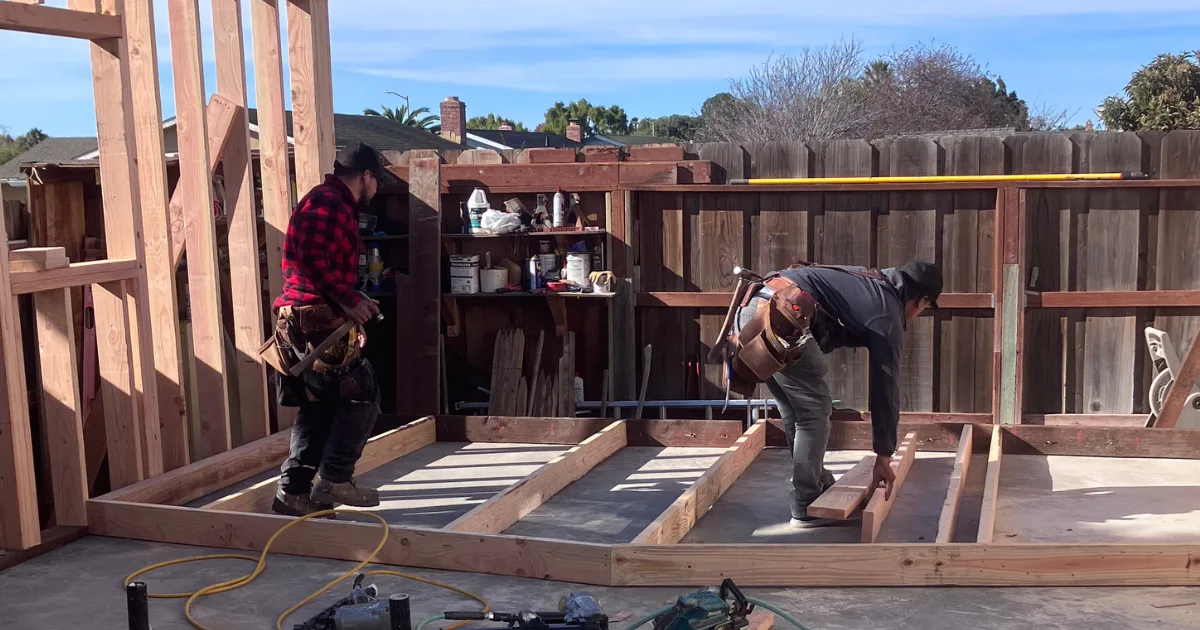
How Much Does a General Contractor Make : Guide by NextProgen Builders
If you are researching how much a general contractor makes, you may be surprised to learn that contractor income does not work exactly like a traditional salary. A general contractor may earn money through project management, construction services, remodeling work, and business operations rather than receiving a fixed paycheck.
For homeowners in Monterey County, Carmel, Monterey, Pebble Beach, Pacific Grove, Seaside, Marina, Salinas, and Soledad, understanding how contractors earn money can also help you better understand a construction estimate and what you are actually paying for when hiring a professional.
How Much Does a General Contractor Make?
There is no single salary that applies to every general contractor. Income can vary significantly depending on experience, project type, business structure, workload, overhead, location, and the size and complexity of the projects being managed.
It is also important to distinguish between a general contractor’s business revenue, gross profit, and personal income. A contractor may manage a large construction project with a substantial contract value, but that does not mean the entire amount becomes the contractor’s income.
Construction businesses may have expenses for labor, subcontractors, materials, equipment, insurance, permits, vehicles, office operations, estimating, project management, and other business costs.
For comparison, the U.S. Bureau of Labor Statistics reported a $114,990 median annual wage for construction managers in May 2025. However, construction manager wages are not the same thing as the income of a self-employed general contractor or construction business owner.
What Determines a General Contractor’s Income?
Several factors can influence how much a general contractor ultimately earns.
Experience and Construction Knowledge
Experience can affect the types of projects a contractor is capable of managing. A contractor handling a straightforward renovation may have a very different business model from one coordinating a whole-home remodel, custom addition, ADU, or new construction project.
Experienced contractors also spend considerable time coordinating schedules, reviewing plans, communicating with homeowners, managing subcontractors, ordering materials, and addressing construction issues.
Project Size and Complexity
A small remodeling project and a large custom home require very different levels of planning and coordination.
Projects involving multiple trades may require more extensive scheduling and management. In California, the CSLB defines a Class B general building contractor around construction involving at least two unrelated building trades or crafts, subject to the applicable licensing rules.
For homeowners, this is one reason it is important to look beyond the contractor’s quoted price and understand exactly what the scope of work includes.
Type of Construction Work
Different services can involve different levels of planning, labor, materials, and coordination.
For example, a contractor working on:
- Custom homes and additions
- ADU construction
- Kitchen remodeling
- Bathroom remodeling
- Complete home renovations
- Decks and outdoor living
- Full roof replacement
- Siding replacement
- Window and door replacement
may have a different project structure for each type of work.
A kitchen renovation, for example, may involve cabinetry, countertops, flooring, plumbing, electrical work, lighting, painting, and finish details. A custom addition can involve design coordination, structural work, exterior finishes, roofing, windows, and several other stages.
The contractor’s role is often to coordinate these moving parts into one organized construction process.
Why a Contractor’s Price Is Not the Same as Their Salary
One of the most common misunderstandings homeowners have is assuming that a contractor’s project price represents the contractor’s personal earnings.
It does not.
Imagine a homeowner receives a construction proposal for a major remodeling project. That contract value may need to cover materials, labor, subcontractors, equipment, permits, project supervision, administrative expenses, insurance, and other costs before the business earns its final profit.
The contractor also assumes responsibility for managing the project and dealing with issues that can arise during construction.
This is why comparing contractors solely by the lowest initial price can sometimes be misleading. A detailed proposal that clearly explains the scope, materials, allowances, exclusions, and project responsibilities can provide a much better basis for comparison.
How General Contractors Make Money on Remodeling Projects
General contractors can manage many different types of residential construction projects.
Kitchen Remodeling
A kitchen renovation may include new cabinets, countertops, flooring, lighting, plumbing fixtures, backsplashes, and updated layouts.
The contractor coordinates the various stages so that demolition, rough work, installation, and finishing happen in the correct sequence.
Bathroom Remodeling
Bathroom projects often require careful coordination because plumbing, waterproofing, electrical work, tile, fixtures, cabinetry, ventilation, and finishes all have to work together.
Material selection can also affect the overall project budget. Homeowners may choose from different tile materials, countertop surfaces, cabinetry styles, fixtures, and finish levels.
Custom Homes and Additions
Custom homes and additions generally involve more extensive planning than a limited renovation.
Depending on the project, the process may include design coordination, site preparation, structural construction, exterior materials, roofing, windows and doors, interior finishes, and final details.
ADU Construction
Accessory dwelling units can provide homeowners with additional living space, guest accommodations, or flexible space for changing household needs.
Because an ADU is a construction project rather than simply an interior renovation, planning, site conditions, utilities, design requirements, and construction sequencing all need to be considered.
Roofing, Siding, Windows, and Doors
Exterior improvements can also form an important part of a contractor’s work.
Replacing an aging roof, updating siding, or installing new windows and doors can change both the appearance and performance of a home. Material choices should account for durability, appearance, maintenance, and compatibility with the existing structure.
Does Location Affect Contractor Income?
Location can influence construction costs and the type of projects available, but it is difficult to assign one reliable contractor salary to an entire region.
The Monterey Peninsula has a mix of older homes, coastal properties, established neighborhoods, newer construction, and custom residential projects. Homeowners in Carmel-by-the-Sea, Pebble Beach, Monterey, and Pacific Grove may have different renovation goals and property considerations than homeowners in Salinas, Marina, Seaside, or Soledad.
Site access, existing construction, project scope, material selection, design requirements, and local permitting considerations can all affect a project’s complexity.
For this reason, homeowners should focus on obtaining a detailed project assessment rather than relying on a generic national or regional salary figure.

What Should Homeowners Look for When Hiring a General Contractor?
If you are planning construction in Monterey County, the contractor’s personal income should not be the main factor you use to choose someone.
Instead, look at the contractor’s approach to your project.
1. Clear Scope of Work
Your proposal should make it reasonably clear what work is included and what is excluded.
2. Construction Planning
Ask how the contractor expects the project to progress from initial planning through completion.
3. Material Options
Understand which materials and finishes are included and whether you have choices available for items such as roofing, siding, windows, doors, cabinetry, countertops, flooring, and fixtures.
4. Communication
Construction can involve many decisions. A contractor who communicates clearly can make the process easier for the homeowner.
5. Appropriate California Licensing
California has specific contractor licensing requirements. The Contractors State License Board states that businesses or individuals performing qualifying construction work generally need to be licensed, subject to applicable exemptions and requirements.
Homeowners can also use the CSLB’s online license-checking service to verify contractor license information before signing a contract
Planning Your Construction Project in Monterey County
Before requesting estimates, take some time to define what you actually want to accomplish.
For example, instead of simply saying you want to “remodel the house,” consider whether your goal is:
- A complete home renovation
- A kitchen or bathroom remodel
- A home addition
- An ADU
- New windows and doors
- Siding replacement
- A roof replacement
- A new deck or outdoor living area
- Several improvements completed as one larger project
Having a clear objective helps a contractor understand the scope and prepare a more useful proposal.
Material preferences should also be discussed early. Two homeowners can have the same basic renovation plan but very different budgets because they select different cabinetry, flooring, roofing, windows, countertops, fixtures, and finishes.
Questions to Ask Before Hiring a General Contractor
Before starting construction, homeowners should consider asking:
What exactly is included in the proposal?
Ask about labor, materials, subcontracted work, cleanup, and other project responsibilities.
Who will manage the project?
Clarify who will be your primary point of contact during construction.
What materials and finishes are included?
Make sure important selections are identified rather than assuming every finish is included at the same level.
How will changes be handled?
Ask how changes to the original scope are documented and approved.
What should I prepare before construction starts?
Your contractor can explain decisions, access requirements, selections, and other preparation that may be necessary.
Frequently Asked Questions
Is a general contractor paid a salary?
Not necessarily. An employed construction manager or contractor may receive a salary, while an independent general contractor or business owner typically earns income through the operation of their construction business.
Can general contractors make more than construction managers?
They can, but there is no universal answer. A contractor’s income can vary based on project volume, business expenses, project types, pricing, experience, and profitability. Construction manager salary data should not be treated as a direct measure of a contractor’s business income.
Why does a construction project cost more than labor and materials?
The project price can include project management, subcontractor coordination, estimating, equipment, insurance, administration, permits, scheduling, and other business and construction expenses in addition to direct labor and materials.
Does a more expensive contractor always provide better work?
Not necessarily. Price should be considered alongside scope, communication, experience, project planning, materials, contract terms, and the overall approach to your project.
How do I compare general contractor estimates?
Compare the actual scope of work rather than only the final price. Look at included materials, labor, project responsibilities, allowances, exclusions, schedules, and how potential changes are handled.
Should I hire a general contractor for a major home renovation?
For a renovation involving multiple trades, a general contractor can coordinate the different stages and trades involved in the project. The right choice depends on the size and complexity of your renovation.
Planning Your Next Home Improvement Project?
Whether you are considering a custom home addition, ADU construction, kitchen or bathroom remodeling, complete home renovation, roofing, siding, windows and doors, or an outdoor living project, understanding the construction process is just as important as understanding the budget.
NEXTPROGEN Builders works with homeowners throughout Monterey County and the Monterey Peninsula, including Carmel, Carmel-by-the-Sea, Monterey, Pebble Beach, Pacific Grove, Seaside, Marina, Salinas, and Soledad.
If you are planning a construction or remodeling project, contact NEXTPROGEN Builders to discuss your goals, scope, materials, and next steps.